Numbers stamped on binoculars are the first thing most birders learn and the last thing they stop arguing about. 8x42 and 10x42 sit right at the centre of that argument, and they are the two configurations you will see most often hanging around necks at British reserves, in bluebell woods and on windy seawatching points.
On paper the difference is small: two turns of magnification, the same 42mm front lens. In the field it changes how much you see, how steady the image feels at the end of a long walk, and whether you can pick a wader out of a heat-shimmered estuary. What follows is what each does well, and how to choose.
What the numbers actually mean
The first figure is magnification: an 8x42 brings a bird eight times closer, a 10x42 ten times. The second is the diameter of the objective lens in millimetres — 42mm on both, which is exactly why these two sizes compete so directly. Same glass, same light-gathering area, different magnification.
Divide the objective by the magnification and you get the exit pupil, the little disc of light that reaches your eye: 5.25mm on the 8x42, 4.2mm on the 10x42. A larger exit pupil is more forgiving of where you place your eyes and gives a slightly brighter image when light is poor. It also makes the binocular easier to use if your pupils no longer dilate as widely as they did at twenty.
Field of view: the woodland test
This is where the two sizes separate most obviously. An 8x42 typically shows a field of view somewhere around seven to eight degrees — roughly 120 to 140 metres across at a kilometre. A 10x42 usually gives about five and a half to six and a half degrees. That is a real difference when you are trying to keep up with a moving flock of long-tailed tits at eight metres in a hawthorn hedge.
Depth of field matters too. Because 8x magnifies less, more of the scene sits in focus at once, so you spend less time turning the focus wheel while a warbler works through the leaves. With 10x you get a shallower band of sharpness and a narrower window on a busy scene. If your local patch is oak woodland, scrubby hedgerows or a small garden, the wider view is worth more than the extra reach.
Light and distance: the wetland case
Both pairs collect the same amount of light. The 10x spreads it over greater magnification, so the image is dimmer for its apparent size — but that is not the whole story. Good coatings and prisms mean a well-made 10x42 is perfectly usable at dawn on a reedbed, and plenty of birders count duck species with one.
Where 10x earns its place is distance. An estuary at low tide is a wide, flat place, and the birds are often two or three hundred metres away. At that range the extra two turns of magnification can turn "diver, probably" into a confident identification. For a drake pintail in flat winter light, or a great northern diver off a headland, 10x does the work.
Steadiness and detail at range
Magnification magnifies your hands as well as the bird. A 10x view of a gannet from a breezy cliff top can shimmer and bounce; the same bird at 8x looks calm. Extra magnification only helps if you can hold it steady.
A useful rule of thumb: most people manage 8x or 10x freehand without trouble. If you have a tremor, or you do a lot of walking and bird from the path rather than a seat, an 8x42 will show you more usable detail than a shaky 10x42. Bracing your elbows on a hide shelf, a gatepost or a tripod changes that calculation in favour of 10x.
Matching the binocular to your habitat
There is no single right answer, but there is usually a right answer for where you bird.
- Woodland and hedgerows: 8x42. Wider field of view, deeper depth of field, quicker to get onto a bird in cover.
- Gardens and feeding stations: 8x42. A wide view and close focus matter more than reach when the bird is four metres away.
- Wetland reserves and estuaries: a judgement call. 10x42 if you mostly scan from hides; 8x42 if you walk the whole reserve and want a settled image.
- Coastal seawatching and open moorland: 10x42. Distance and scale are the whole point.
- One pair for everything: 8x42, unless you know you spend most of your time looking at far-away birds.
Practical buying notes
Whatever the specification says, the pair that suits you is the pair that fits your eyes and hands. A few things to check before you commit.
- Look through both sizes outdoors if you can, ideally at dusk. Shop windows and strip lighting flatter everything.
- If you wear glasses, check eye relief — look for at least 15mm so you can keep your spectacles on and still see the full field.
- Check close focus. Around two metres is handy for insects, flowers and birds at a feeder; some 10x42s struggle to focus that near.
- Weigh them, and try them on a strap. 10x42s are usually heavier, and the difference grows over a six-hour walk.
- Look for waterproofing and nitrogen purging. British winters and coastal spray are unforgiving.
- Ask about the warranty, and consider a reputable second-hand pair from a dealer who will service them.
So which should you buy?
If you want one pair and your birding is mixed — a bit of woodland, a local lake, the odd trip to the coast — buy an 8x42. It is the more forgiving instrument, it is easier to hold steady, and it gets you onto birds faster, which is what identification usually depends on.
Choose a 10x42 if you know your birding happens at distance: estuary counts, seawatching, raptor watches, the wide open spaces of the fens or the moors. If you can, try them side by side at a reserve shop or a birdfair rather than deciding from a specification sheet. A mid-priced pair you actually carry beats a premium pair that stays in the cupboard. And give the strap, the case and the eyecups some thought — you will live with them for years.
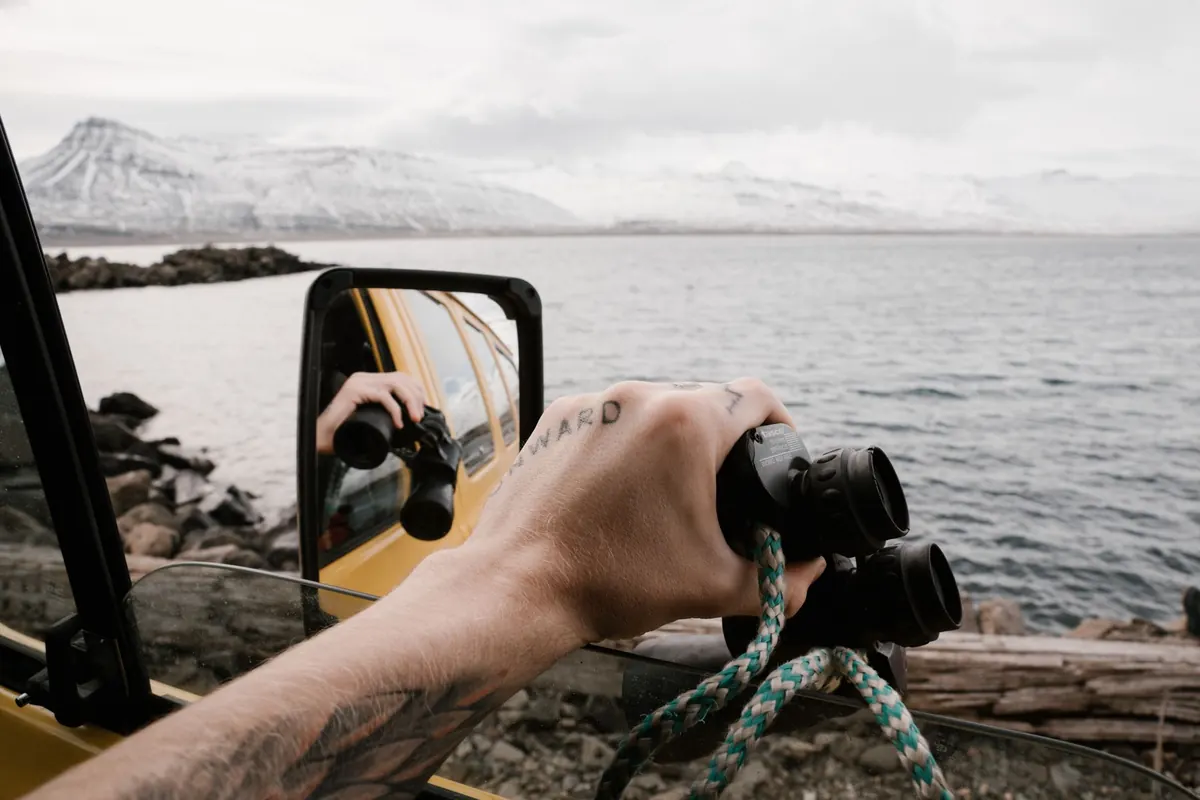
Photo: ArtHouse Studio / Pexels