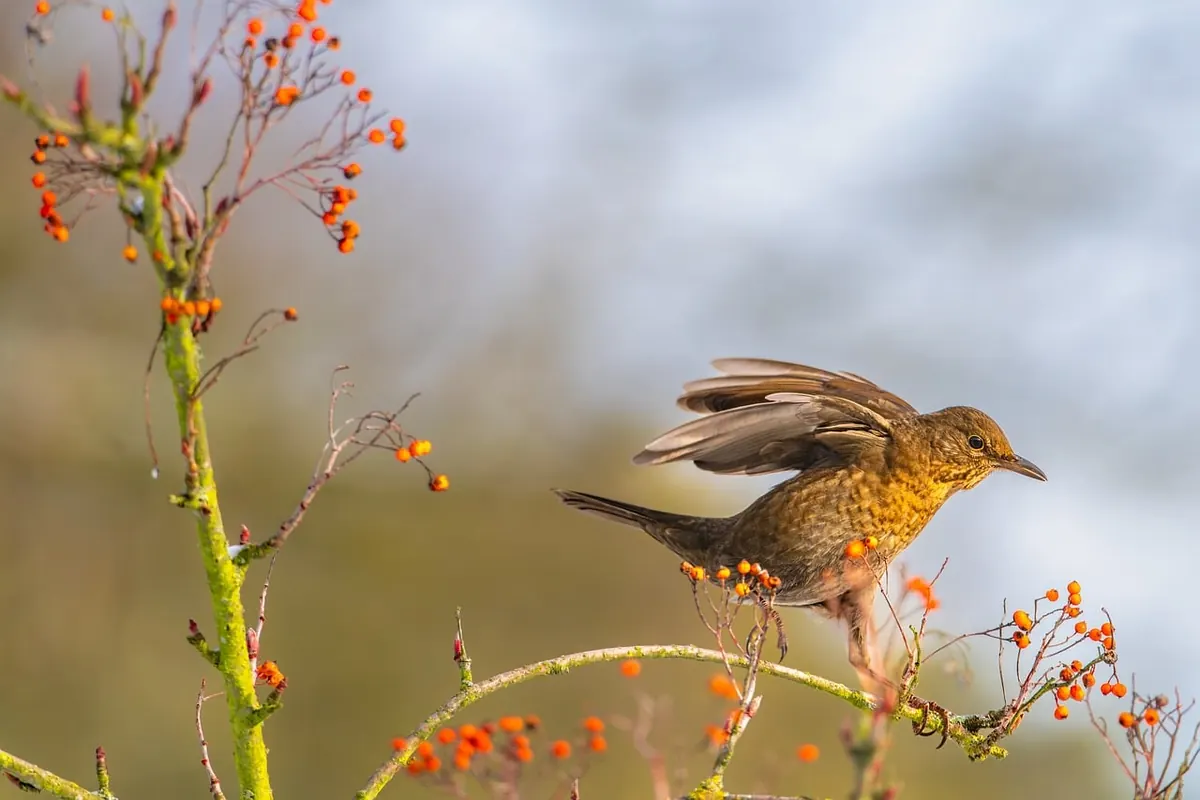
The first hard frost changes the garden. The blackbird on the lawn becomes one of a dozen, all of them working through the last of the ivy berries. From high in the hawthorn comes a thin, drawn-out "seee" — a redwing, newly arrived from Iceland or Scandinavia, and possibly the first one you have ever noticed.
Winter is the sharpest season for British birdwatching. Bare hedges give up their secrets, low sun catches plumage beautifully, and the birds themselves gather in flocks, so effort is rewarded quickly. It is also the hardest time of year to be a small bird. Here is who turns up, where to look for them, and what genuinely helps.
Who arrives, and why
Birds come here for the same reason we reach for a coat: our winters are milder than the ones they leave behind. Redwings and fieldfares are the classic arrivals — thrushes from Iceland and Scandinavia that move in from October onwards and spread across farmland, hedgerows, parks and playing fields. Both feed heavily on berries: hawthorn, rowan, rosehip, cotoneaster and ivy, with windfall apples in orchards.
Fieldfares are the larger, grey-headed birds with a harsh "chack-chack" call. Redwings are smaller, with a pale stripe above the eye and rusty flanks that flash as they fly. The two often travel together, sometimes alongside resident song and mistle thrushes.
Other visitors are less predictable. Waxwings reach Britain in numbers only in some winters, when the berry crop fails further north, and they can turn up anywhere with ornamental rowan — retail parks included. Bramblings mix with chaffinch flocks in beech woods and stubble; siskins work through alder and birch. On wetlands and estuaries, winter brings wigeon, teal, goldeneye, goosander, whooper swans and pink-footed geese, while rough grassland may hold short-eared owls and hen harriers at dusk.
Where to look for winter visitors
Hedgerows, orchards and stubble
Walk a berry-loaded hedge line slowly in the first hour of daylight, and listen rather than scan. Fieldfare calls carry a long way, and a flock that drops into a field to feed usually returns to the hedge afterwards. Old orchards and unsprayed field edges are especially good, as is ivy on walls in late winter, once the other berries have gone.
Estuaries, wetlands and reservoirs
Winter wildfowl concentrate where water levels and tides push them together. On an estuary, the rising tide brings ducks closer to the shore and to any hide or sea wall, which is why a tide table is more useful than luck. Reservoirs, gravel pits and flooded meadows do the same job inland. Reserves on the north Norfolk coast, the Ouse Washes, Rutland Water and the Somerset Levels are reliably good, though any decent stretch of wet habitat will hold something worth watching. Check the shallows and the edges first.
Berries in town
Waxwing winters are urban winters. Check rowan, cotoneaster and hawthorn in supermarket car parks, retail estates, cemetery edges and quiet residential streets. If you find a flock, watch from a distance — they are unusually tame, but they still need to feed, and a crowd around a tree soon moves them on.
Rough grassland at dusk
Short-eared owls hunt by day in winter, but the last hour of light is when they and hen harriers come in to roost. Find a rough grass field or moor edge, stand at the boundary and keep your distance. Leave before it is fully dark, both for your own sake and to avoid pushing birds off their roost.
Feeding birds well
Cold weather raises the energy a small bird needs simply to survive the night, and food is hardest to find in the first hour after dawn. A reliable feeder changes the odds.
- Sunflower hearts — high in fat, no husks, taken by almost everything.
- Suet and fat balls — excellent in freezing weather; take them out of the net if they arrive in one.
- Nyjer seed — for siskins, goldfinches and redpolls.
- Mealworms — particularly popular with robins, wrens and blue tits.
- Peanuts — only from a mesh feeder, and never loose, dry or salted.
- Fruit and unsalted scraps — windfall apples and pears for thrushes; keep it modest.
Bread fills a bird without giving it much, so it is better left in the kitchen. Start feeding before the cold snap rather than during it, and top up in the afternoon so there is food at first light. Once birds rely on your feeders, gaps matter.
Water, shelter and safety
Frozen water is a real problem. Birds need to drink and to bathe, because clean, well-kept feathers are what keep them warm. Refresh a shallow dish daily, or float a small ball in it to keep a patch open — never add salt, antifreeze or glycerine.
Shelter matters as much as food. A dense hedge, ivy on a wall, a thick shrub or a roosting box out of the wind gives birds somewhere to sit out the coldest nights. Hold off heavy pruning until late winter, leave seedheads standing, and leave a corner of leaf litter in place: it feeds the invertebrates that many birds switch to once the berries run out.
Two hazards are worth tackling. Feeders placed either very close to a window or well away from it reduce the chance of a bird hitting the glass at speed; if collisions happen, external stickers or window film on the outside of the pane help. And if you have a cat, a collar bell plus keeping it indoors at dawn and dusk makes a real difference to your local birds.
Keeping the feeding station clean
Crowded, dirty feeders spread disease, and winter is when birds gather around them most.
- Clean feeders every couple of weeks, and more often in mild, damp spells: hot soapy water, rinse well, dry fully.
- Move feeders around the garden, or rotate which ones are in use.
- Clear spilled and old food from beneath the feeder.
- Wash your hands afterwards, every time.
If you see birds that look fluffed up, dull or unwilling to fly, take the feeders down for a fortnight and clean everything thoroughly before they go back. Unusual numbers of dead garden birds or waterfowl can be reported to the Garden Wildlife Health project, and the relevant government helpline handles reports of dead wild birds such as swans and geese. Never handle a sick or dead bird with bare hands, and follow current official hygiene guidance.
Watching comfortably in the cold
Winter days are short, so plan around the light rather than around a full itinerary: two good hours at dawn usually beat a whole day of driving. Two pairs of socks, a flask and gloves you can actually use a camera in are worth more than an expensive coat. Keep binoculars inside your jacket so they don't fog, and carry a cloth. Muddy paths and sudden floods are normal, so wear boots and check sunset times before you set off.
Start with one thing this week
You do not need a large garden or a rare visitor to make winter better for birds. Pick one action and do it properly.
- Hang a feeder where you can see it from the kitchen, and keep it filled.
- Put out a shallow dish of water and break the ice each morning.
- Leave one hedge uncut and one patch of seedheads standing until spring.
- Spend a cold morning walking a local hedgerow, then record what you see — counts sent to BirdTrack, or to the RSPB's Big Garden Birdwatch each January, add to a picture no single garden can provide.
Winter birdwatching rewards the people who go out on the unpromising days. Wrap up, take the flask, and start with the nearest hedge.
Photo: Gruendercoach / Pixabay